
Caple Industrial Solutions
0
0
Currency
Troubleshooting

Woodworking Machine Troubleshooting & FAQs

Find practical first-level troubleshooting guidance for woodworking and furniture-manufacturing machinery. Select your machine category, identify the symptom, check the possible causes and follow the recommended corrective actions. For machine-specific faults, always refer to the manufacturer’s manual or contact Caple Service.

For reference and overview purposes only.
This portal serves exclusively as a directional guide to help you identify potential machinery issues and determine appropriate next steps. All information, troubleshooting steps, and FAQ guidance presented across these pages are provided strictly for general educational and reference purposes.

Before undertaking any technical inspection, adjustment, repair, or physical intervention, you must validate all diagnostic checks and procedures with qualified service engineers or certified technicians, as well as consult your specific equipment manufacturer manual. We assume no responsibility or liability for any personal injuries, accidents, equipment damages, or operational losses incurred as a result of actions taken based on this information.

Choose your machine category
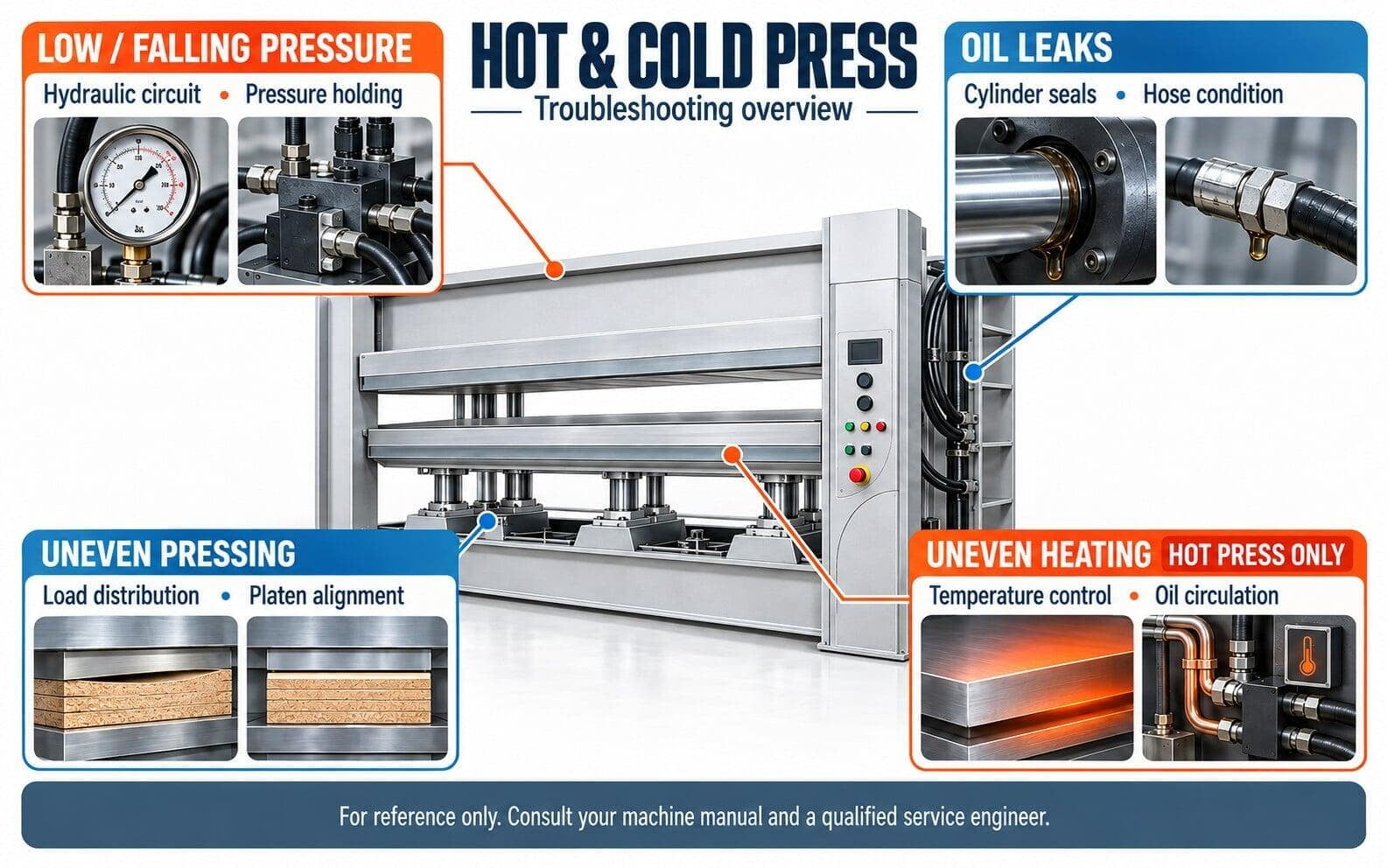
Hot press and cold press machine troubleshooting - Caple

PRESS

Hot Press and Cold Press Troubleshooting

Diagnose issues like hydraulic pressure loss, cylinder oil leaks, uneven platen compression, and platen heating variations. Implement targeted checks for seal integrity, temperature control circuits, and structural load balance.

Pressure loss · Oil leakage · Uneven pressing · Heating problems · Oil Circulation · Hose Condition
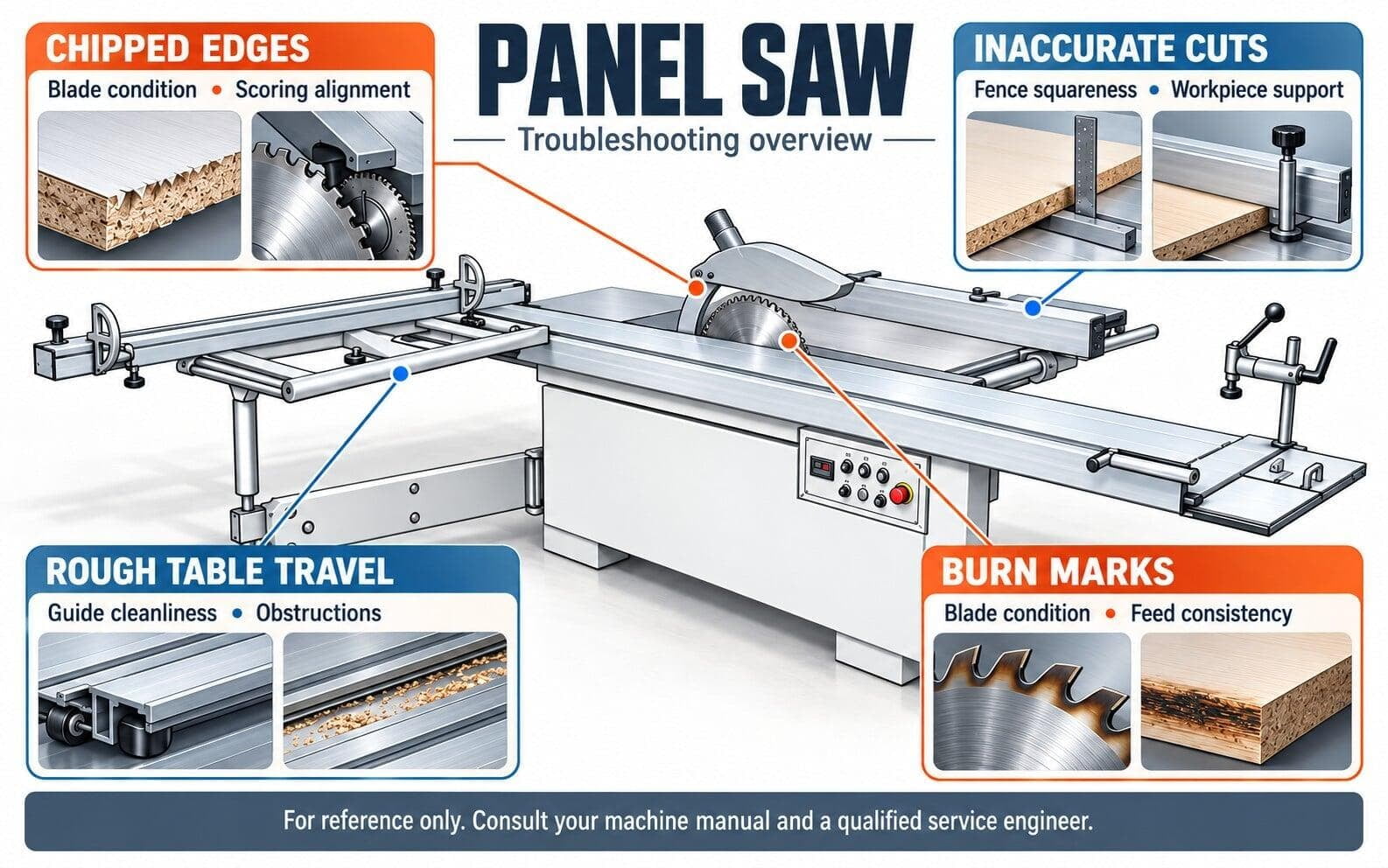
Sliding table panel saw troubleshooting - Caple

PANEL SAW

Sliding Table Panel Saw Troubleshooting

Panel saw troubleshooting starts by identifying symptoms: chipped edges, inaccurate cuts, vibration, or stiff table movement. This guide explains root causes, recommended checks, and when repair requires service engineers. 

Chipping · Fence Squareness · Scoring Blade · Fence alignment · Blade alignment issues · Digital readout errors
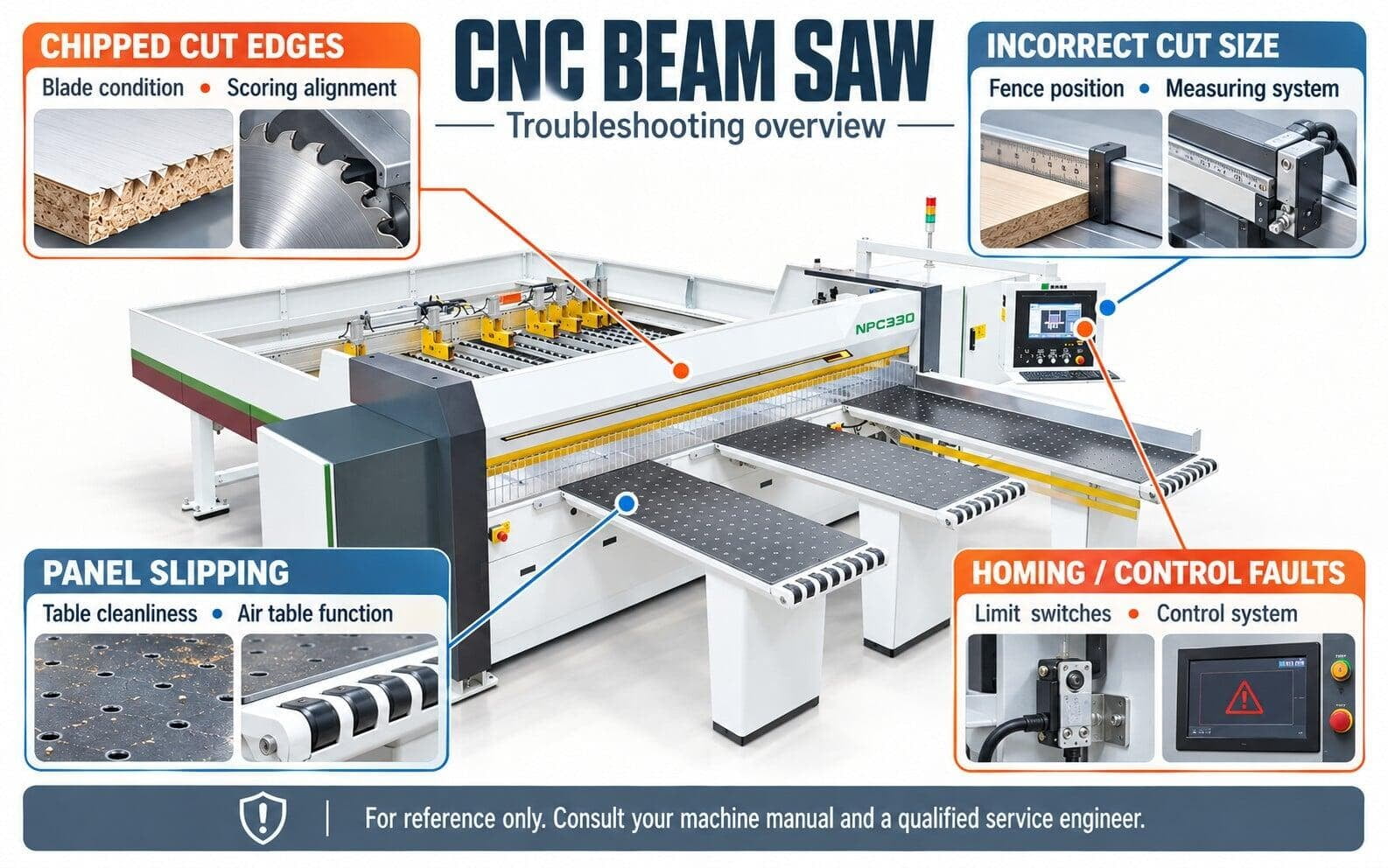
CNC beam saw machine troubleshooting - Caple

CNC BEAM SAW

CNC Beam Saw Troubleshooting

Diagnose CNC beam saw faults: carriage homing, cut dimension and squareness errors, chipped or burned edges, gripper and pressure-beam clamping, air-float extraction, software job import and barcode label issues.

Chipping & burning · Gripper clamping · Air-float & extraction · Job import & labels
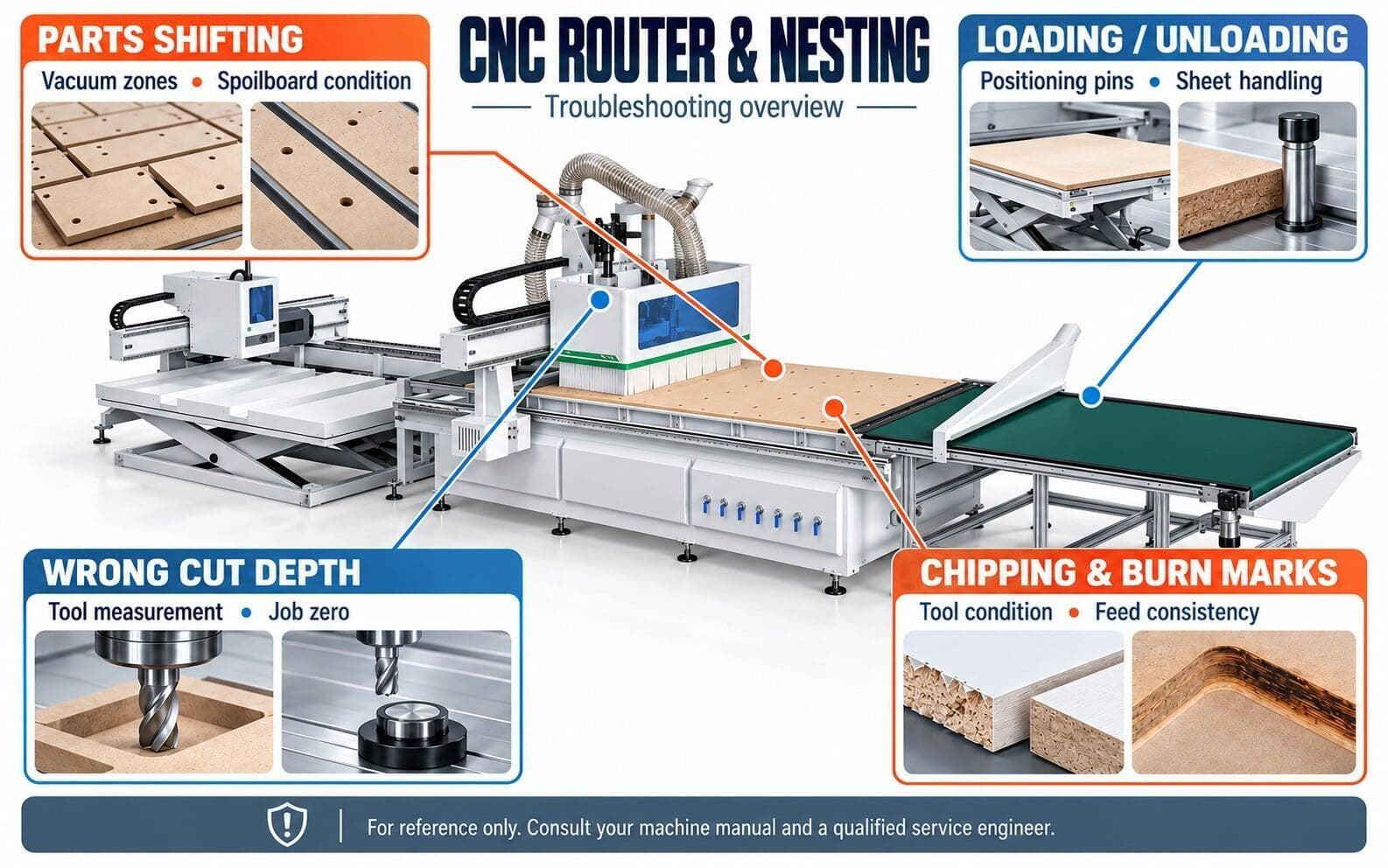
CNC router and nesting machine troubleshooting - Caple

CNC ROUTER & NESTING

CNC Routers and Nesting CNC Troubleshooting

CNC router and nesting troubleshooting covers workholding, cut depth, tooling, positioning, and job execution. Address automatic loading faults, review basic checks, and contact service before undertaking repairs.

Vacuum loss · Workpiece movement · Cut depth · Tool offsets 
Edge banding machine troubleshooting - Caple

EDGE BANDING

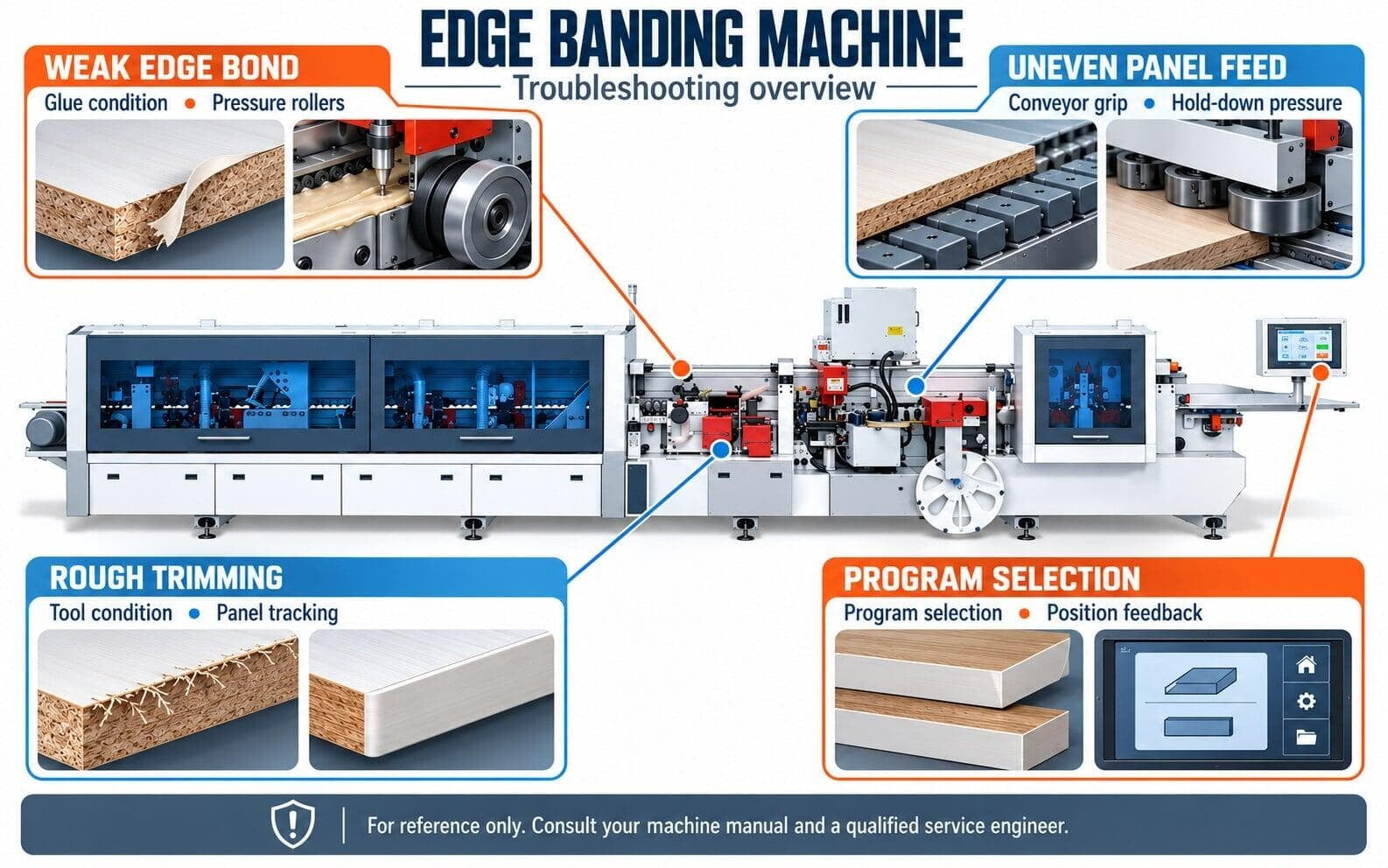
Edge Banding Machine Troubleshooting 

Work through glue bonding failures, panel feeding problems, trimming and scraping quality, and glue-pot temperature control. Explains which faults an operator may correct and which require a service engineer.

Glue bonding · Feeding · Trimming · Scraping · Temperature
Multi-boring and CNC drilling troubleshooting - Caple

DRILLING

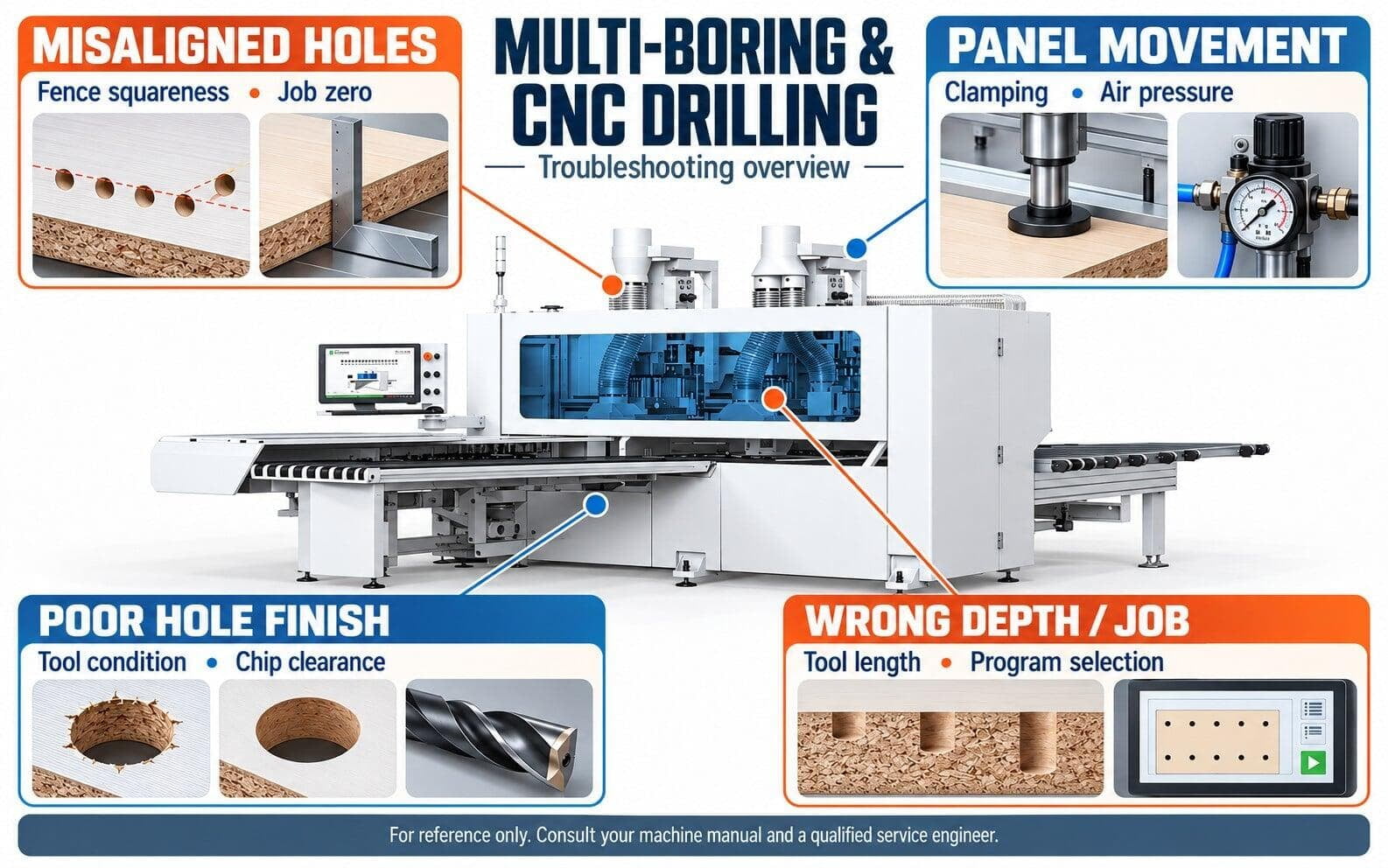
Multi-Boring & CNC Drilling Troubleshooting

Correct hole misalignment, panel movement under clamping, hole tear-out, and inaccurate drilling depths. Standardize fence squareness, pneumatic clamping pressure, and tool zero references for accurate multi-hole drilling.

Hole position · Clamping · Tear-out · Depth · Tool references

Frequently Asked Questions

Quick answers to the most common machine faults. For detailed step-by-step guidance, open your machine category above.

Press Pressure Loss

Why is my cold press or hot press losing pressure or leaking oil?

Pressure loss and cylinder oil leaks are usually caused by worn hydraulic seals, a failing pump, or a loose fitting in the pressure line. Uneven platen compression or inconsistent heating across the platen can point to a structural load-balance issue or a faulty heating circuit. Have a service engineer check seal integrity and the temperature control circuit before running another cycle.

Panel Saw Chipping Edge

Why is my panel saw giving chipped edges or out-of-square cuts?

Chipped edges, inaccurate cuts, vibration, or a stiff-moving table usually trace back to blade condition, fence alignment, or scoring blade setup. Start with a fence-squareness check and blade inspection; persistent vibration should be escalated to a service engineer rather than adjusted manually.

Beam Saw Clamping Fault

What causes chipping, burning, or clamping faults on a CNC beam saw?

These typically stem from carriage homing errors, gripper or pressure-beam clamping problems, air-float and extraction issues, or blade wear. Cut-dimension and squareness errors can also come from a software job-import or barcode-label mismatch — check the job file before assuming a mechanical fault.

Router Vacuum Loss

My CNC router keeps losing vacuum or the workpiece is shifting - what should I check?

Vacuum loss and workpiece movement are the two most common CNC router and nesting faults, usually linked to seal wear on the table zones, incorrect zone selection for the panel size, or worn gaskets. Cut-depth and tool-offset errors point to tooling setup rather than the vacuum system.

Edge Bander Glue Marks

Why is my edge bander leaving glue marks or poor trimming?

Glue-bonding failures are most often a glue-pot temperature problem - too hot, too cold, or an inconsistent heat-up cycle. Feeding problems and poor trimming or scraping quality usually mean the pressure rollers or trimming units need adjustment. Confirm glue temperature first, since it's the fastest fix.

Drilling Hole Misalignment

What causes misaligned or torn-out holes on a multi-boring or CNC drilling machine?

Hole misalignment and tear-out are usually caused by incorrect fence squareness, insufficient pneumatic clamping pressure allowing the panel to shift, or tool zero-reference drift. Inaccurate drilling depth is almost always a tool-reference calibration issue.

DIY vs Service Engineer

Can I fix these issues myself, or do I need a service engineer?

This guide is for first-level diagnosis only. Basic checks such as fence alignment, glue temperature, and clamping pressure can often be done by trained operators. Anything involving hydraulics, electrical or heating circuits, or structural adjustment should go to a certified technician - contact Caple Service with your machine model, serial number, and fault description.

Before Contacting Service

What information should I have ready before contacting Caple Service?

Your machine model and serial number, a description of the fault, the exact alarm or error message if one is displayed, a clear photo of the machine nameplate, and only if it can be taken safely, a photo of the fault itself.

Still need help? Start a Caple service diagnosis

Keep your machine model, serial number, fault description and the exact alarm message ready. Please also have a clear photograph of the machine name plate, and share fault photographs only when they can be taken safely.

Message Caple Service on WhatsApp
Start Caple service diagnosis now
Items have been added to cart.
One or more items could not be added to cart due to certain restrictions.
Added to cart
Quantity updated
- An error occurred. Please try again later.
Deleted from cart
- An error occurred. Please try again later.