CNC Router Machine
( 10 Products Available )CNC Router vs CNC Nesting Machine — Which Is Right for Your Furniture Factory?
CNC routers and CNC nesting machines are often confused — both cut wood using a spinning router bit guided by computer code. But they are designed for fundamentally different production scenarios. Choosing the wrong one means either overpaying for capability you will never use, or bottlenecking your factory with a machine that cannot handle your throughput. This guide explains how each machine works, where each excels, and how to match the right machine to your production model. Caple Industrial Solutions, an authorised dealer for Nanxing CNC equipment, helps furniture manufacturers across India make this decision every day.
What Is a CNC Router?
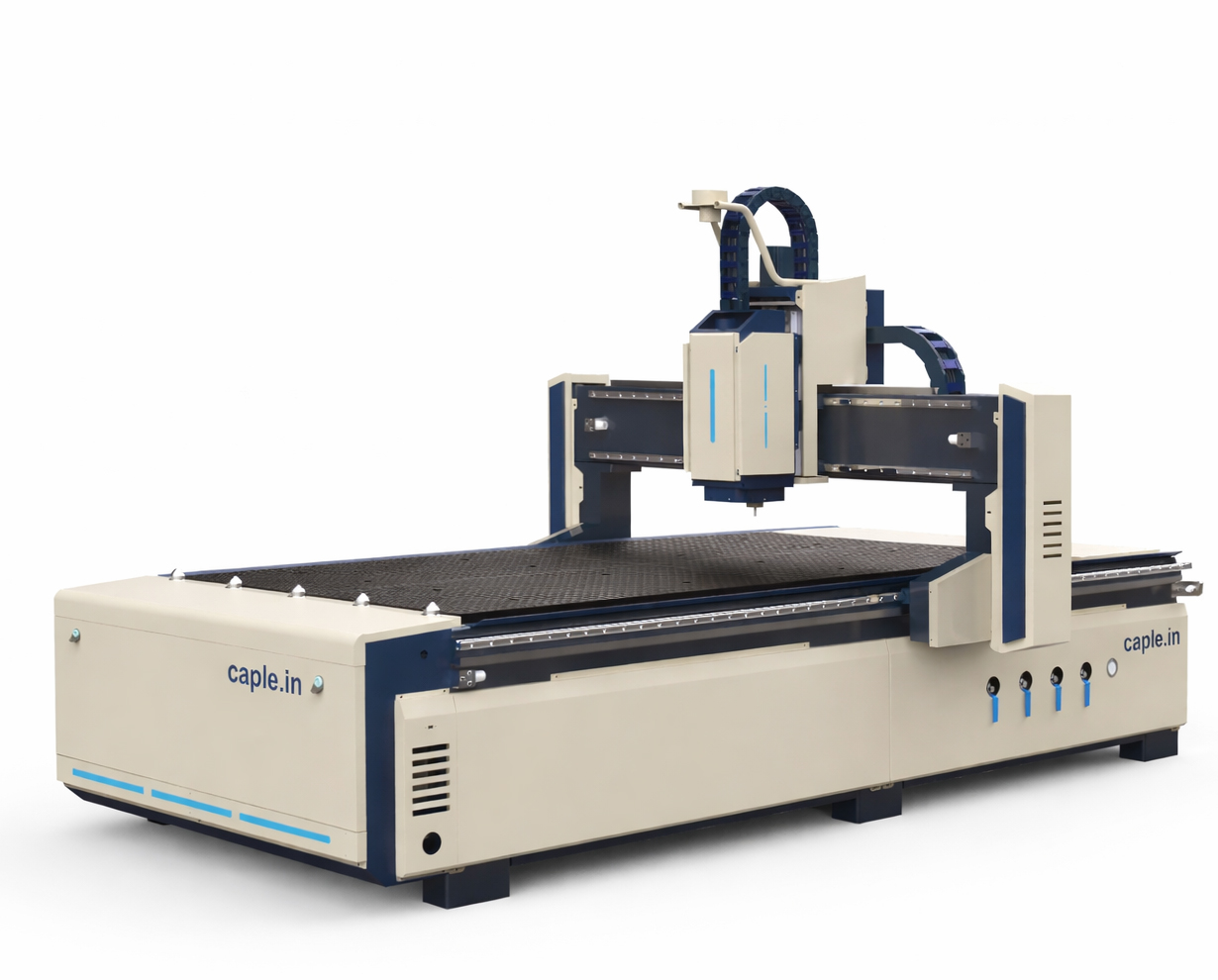
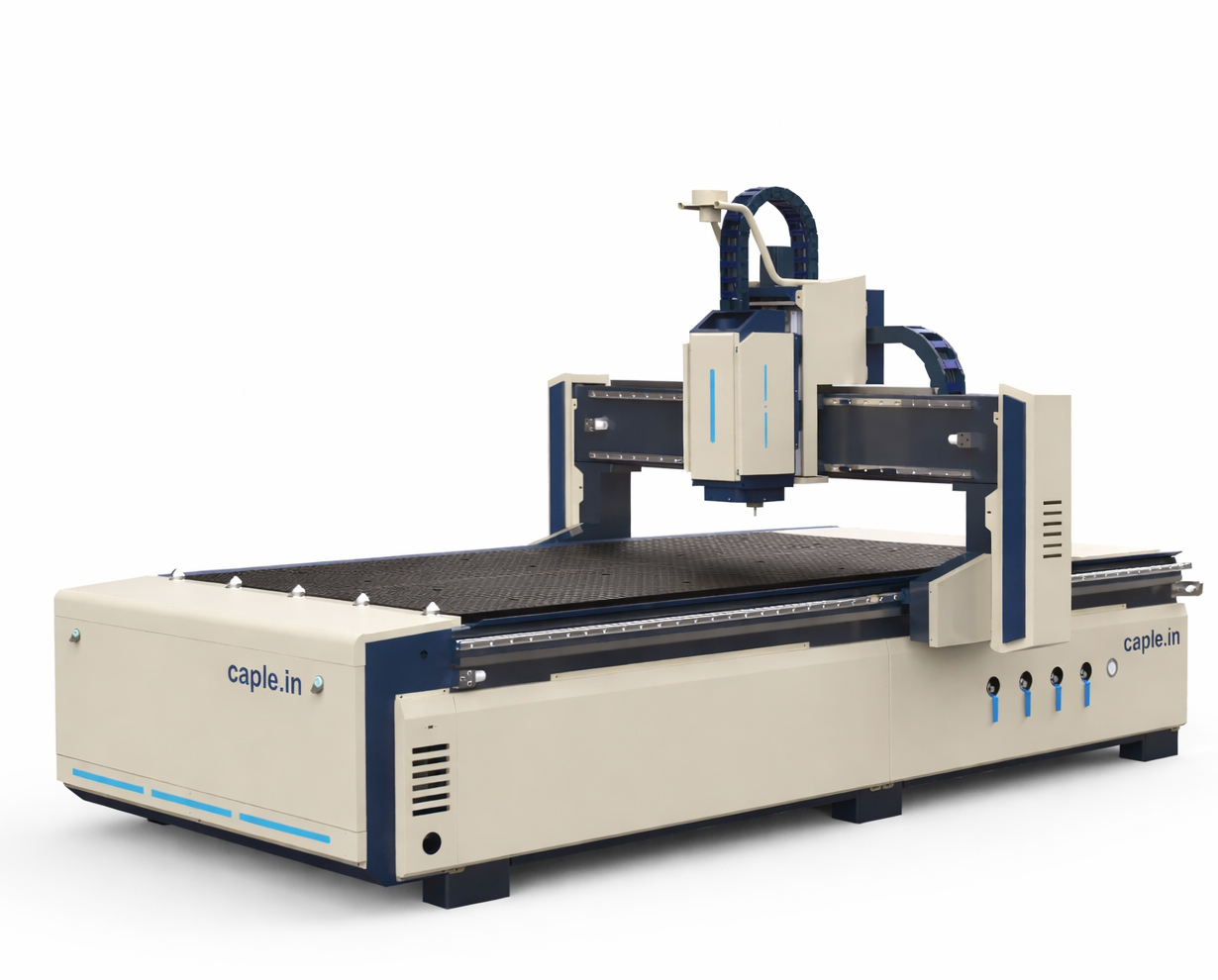
A CNC router is a computer-controlled machine with a high-speed routing spindle mounted on a gantry that moves in X, Y, and Z axes over a flat table. The operator loads a sheet of material, clamps or vacuums it to the table, and the machine executes a programmed toolpath — cutting profiles, routing pockets, engraving patterns, or drilling holes.
CNC routers are defined by their versatility. With an automatic tool changer (ATC), a single machine can switch between a straight bit for panel cutting, a V-groove bit for decorative routing, a ball-nose bit for 3D carving, and a drill for boring — all within one job. This makes the CNC router the right choice for:
- Custom furniture with shaped components and decorative routing
- Signage, pattern work, and carved elements
- Low-to-medium volume production with high design variety
- Door manufacturing with routed profiles
- Prototyping and one-off fabrication
The limitation of a standard CNC router is that it processes one sheet at a time with manual loading and unloading. This limits throughput and increases labour cost per part.
What Is a CNC Nesting Machine?
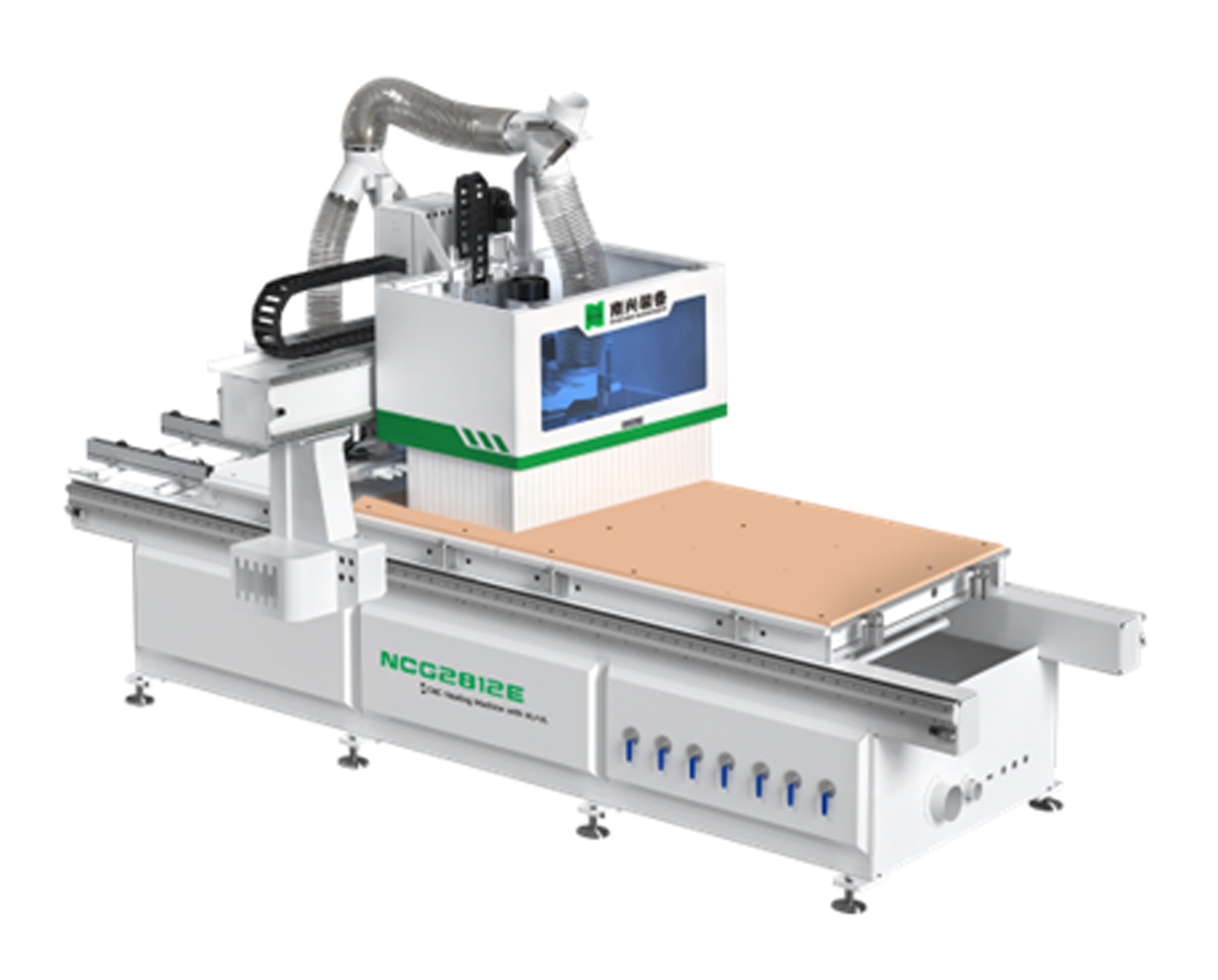
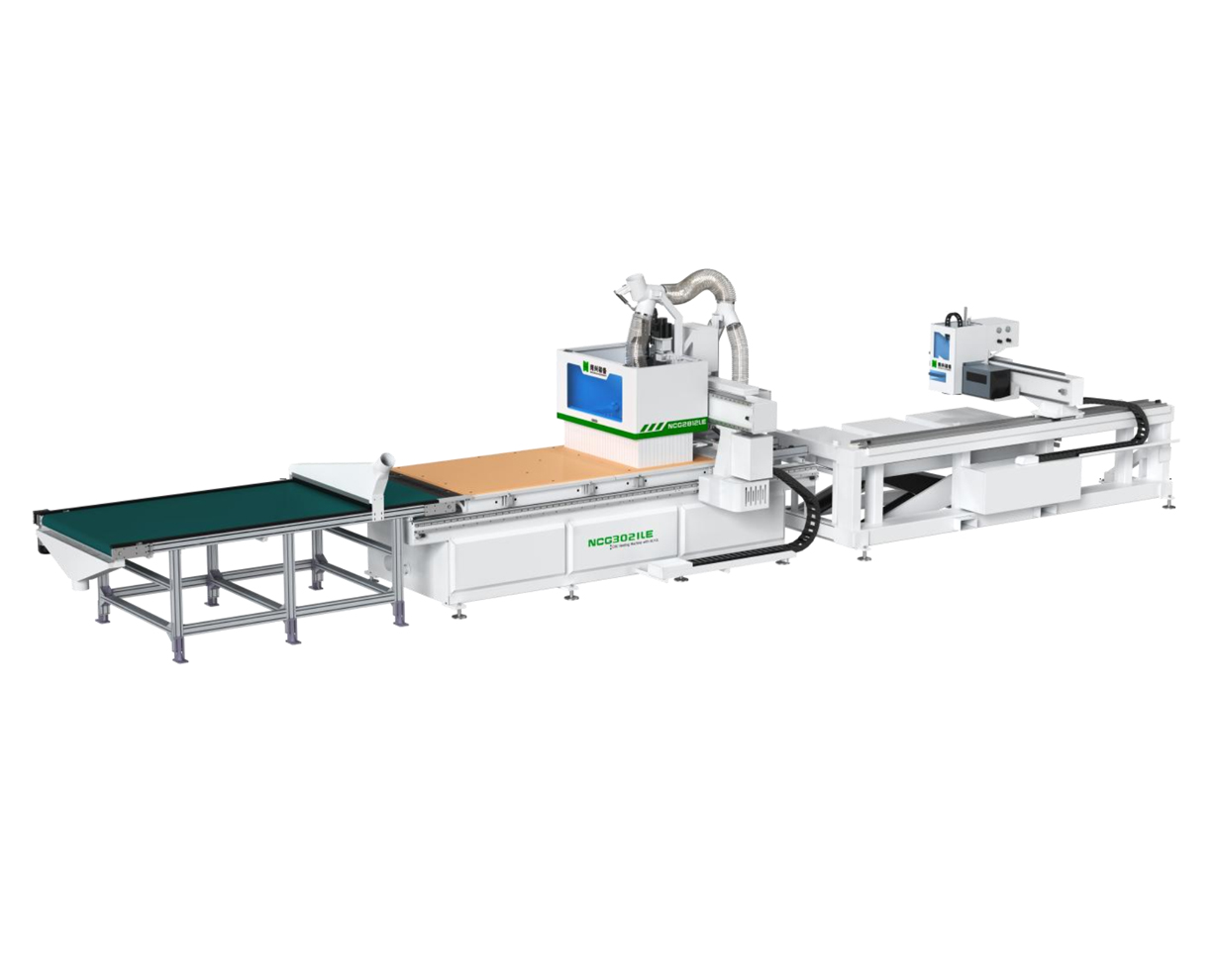
A CNC nesting machine is a purpose-built evolution of the CNC router, designed specifically for high-volume panel processing. The key difference lies in workflow integration: a nesting machine connects to furniture design software (Cabinet Vision, imos, industry-specific CAD-CAM) and receives a complete cutting list. The nesting software then arranges all parts from that list onto full sheets of board with minimal waste — a process called nesting — and the machine executes cuts, drillings, and routings automatically.
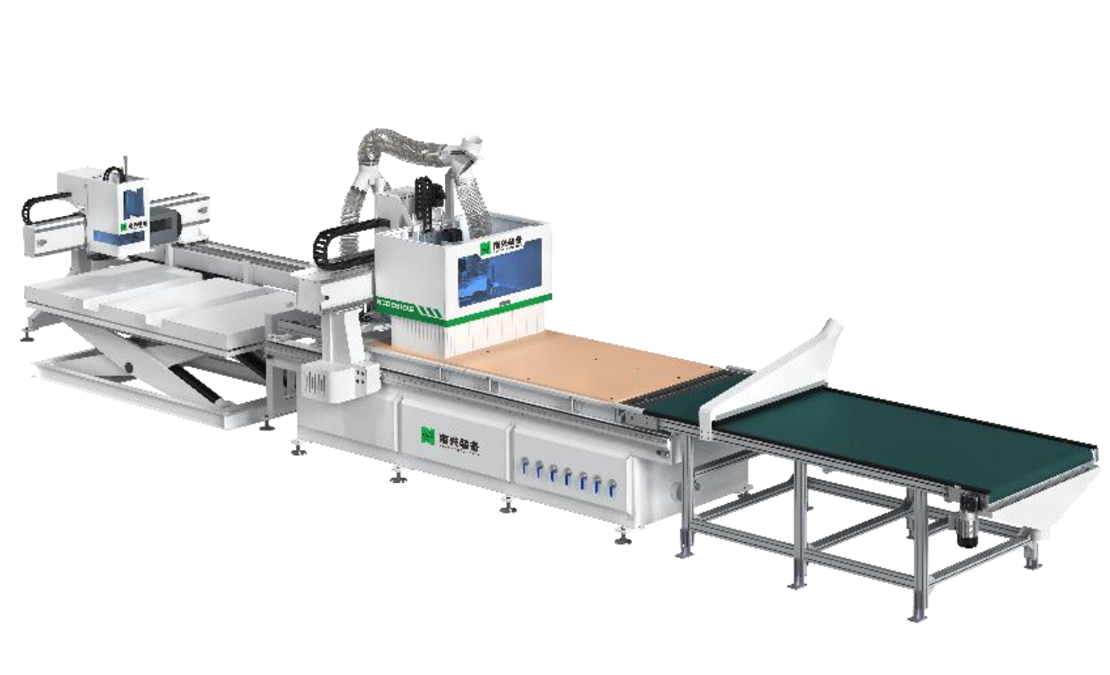
Advanced Nanxing nesting machines include auto-loading from a stack of boards and auto-unloading of finished parts, reducing operator involvement to supervision and part labelling. This is a fundamentally different production model from a standalone router.
CNC nesting machines are the right choice for:
- Panel furniture production at scale — cabinets, wardrobes, kitchens
- Batch manufacturing where each batch may be a different design
- Operations targeting material yield optimisation
- Factories integrating design-to-production software workflows
- Businesses wanting to reduce dependence on skilled manual labour for cutting
How Material Yield Differs Between the Two
This is one of the most commercially important distinctions. A panel saw cuts rectangles — efficiently, but without optimising part arrangement across sheets. A CNC nesting machine arranges irregular parts, off-square components, and multiple part types together on a single sheet, fitting them like puzzle pieces to minimise offcuts.
For a factory producing modular furniture with many panel sizes per job, the material savings from nesting optimisation accumulate across every production run. Over time, this difference in yield can meaningfully offset the higher cost of a nesting machine versus a panel saw.
ATC Routers — The Versatile Middle Ground
An ATC (automatic tool changer) CNC router bridges the gap between a basic router and a full nesting line. With a carousel of tool holders — typically 8 to 16 — the machine switches bits automatically during the job. An ATC router can handle panel cutting, through-hole drilling, edge profiling, and V-grooving in a single program.
Nanxing produces a range of ATC routers suited to workshops that need versatility across diverse job types. As an authorised Nanxing dealer, Caple Industrial Solutions stocks and demonstrates these machines at its demo centres. Contact Caple to discuss which Nanxing model suits your product range.
When to Choose Each — A Practical Decision Framework
Use this framework to guide your decision:
- Choose a CNC Router if: you produce custom, varied designs in low-to-medium quantities; you work with signage, carvings, or 3D relief; your jobs are short-run and design-intensive; or you are a joinery shop needing a versatile machining platform.
- Choose a CNC Nesting Machine if: you are producing panel furniture at volume; your designs are standardised enough to drive from software; you want to reduce manual cutting labour; and material efficiency is a financial priority.
- Choose both if: your factory has a high-volume standard product line (nesting handles this) and also takes custom orders or decorative work (the router handles this). Many growing furniture factories in India run a nesting machine for production and a standalone router for custom work.
Total Cost of Ownership — Beyond the Machine Price
The purchase price of the machine is one component of the decision. Consider also:
- Tooling: Nesting machines consume router bits at a known rate per sheet. Bit cost per part is predictable and should be factored into your unit economics.
- Software: A nesting machine only operates at full efficiency when paired with appropriate CAD-CAM and nesting software. Budget for software licences and operator training.
- Dust extraction: Both machine types require dedicated extraction. Undersized extraction is a common oversight in new factory setups.